Are Your CSR Challenges Trying to Tell You Something?
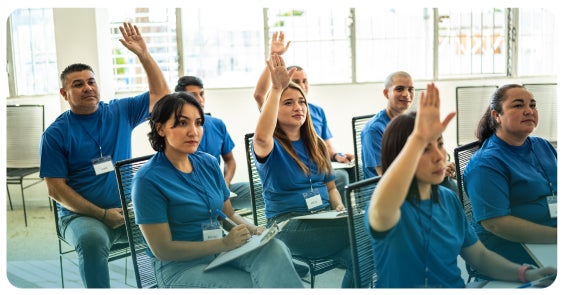
Low participation.
Difficulty proving impact.
Leadership questioning program value.
At first glance, these look like CSR challenges themselves. But, often, they’re simply the messages our programs are sending us.
The most successful leaders learn to translate those messages.
Instead of asking, “How do we come up with a quick fix?” they ask, “What is this challenge actually trying to tell us?”
In this blog, we’ll decode some of the most common signals CSR programs send and explore how other organizations responded when they discovered what was really happening beneath the surface.
Main Takeaways:
- CSR challenges often point to design gaps, not a lack of employee interest or organizational commitment.
- The most common issues include low participation, limited resources, inconsistent data, unclear impact, global complexity, and stakeholder scepticism.
- Strong CSR programs connect employee interests, nonprofit needs, business priorities, and measurable outcomes.
- Purpose-built technology can help reduce manual work, improve visibility, and make program data easier to use.
What You Hear: “Employees Aren’t Participating”
Translation: “Our program may not fit how employees want to engage.”
When participation drops, many organizations assume employees simply aren’t interested in social impact. However, with 89% of Gen Z employees and 92% of Millennials saying purpose is important to their job satisfaction, the issue is often less about whether employees want to engage and more about how they want to engage.
Research from our annual YourCause Global CSR Industry Review that companies offering both giving and volunteering opportunities achieve significantly higher engagement rates (16.5%) than organizations offering volunteering (6.3%) or giving alone (5.0%). Internal benchmarking further found that organizations leveraging Employee Resource Groups (ERGs) achieve nearly 2x the volunteer participation rates of companies without ERG involvement.
Taken together, these findings suggest that employees are not only looking for opportunities to engage; but they are actively looking for multiple, flexible ways to give back that reflect their interests, schedules, identities.

“We achieved record breaking results, with a 100% participation rate in volunteer activities – logging over 16,000 hours. […] To maintain such high levels of engagement, we continuously strive to provide diverse and meaningful opportunities for everyone to contribute.”
Toral Maher
Foundation Manager & Executive Director
What You Hear: “We Have Data but Can’t Prove Impact”
Translation: “We’re struggling to turn our activity into a meaningful story.”
One of the most common misconceptions in CSR is that more data automatically leads to better reporting. In reality, many organizations already have plenty of information. They know how many employees participated, how much money was donated, how many volunteer hours were logged, and which causes received support.
What they struggle with is explaining why those numbers matter.
That distinction becomes increasingly important as programs mature. Community partners, employees, executives, and board members are often looking beyond activity metrics to understand what changed because of those efforts. The problem is that the information needed to answer that question is often scattered across multiple systems, reports, surveys, and stakeholders. As a result, merging all that activity data into a single narrative becomes extremely difficult to manage – especially if done manually.
That’s why so many teams are opting to use purpose-built platforms and AI-powered tools to help surface patterns, identify trends, and connect related data across different program areas. These tools condense hours of work into seconds; which in turn allows teams to focus less on collecting information and more on understanding what that information actually means.
Before [partnering with] YourCause, we used a different platform and found a lot of barriers. Associates couldn’t see their volunteer history or how many hours they’d logged, and we hadn’t set up a matching program yet! The reporting feature is amazing. We’ve never been able to see data like this or have data like this in such an easy-to-read way.”
Corinne Dungan
Client and Community Relations Manager
What You Hear: “I don’t have enough time to get everything done”
Translation: “The program has likely outgrown its original processes.”
ACCP and YourCause research found that 72% of CSR teams have taken on additional responsibilities in recent years, reflecting the expanding scope of corporate social impact programs.
However, in many cases, the processes used to manage volunteering, giving, grantmaking, and employee engagement haven’t grown at the same pace. As programs scale, administrative tasks such as posting opportunities, managing registrations, reviewing applications, processing requests, and tracking participation often consume much of the team’s capacity.
Many organizations address this by reducing the number of manual processes required to operate the program. Centralized CSR platforms allow employees to discover opportunities, register for events, submit matching gift requests, log volunteer hours, and track participation through a single experience. Grantmaking workflows, nonprofit vetting, application reviews, approvals, and program administration can also be managed within a common integrated system.
This approach reduces duplicate data entry, manual tracking, email-based coordination, and the movement of information between disconnected tools. It also gives CSR teams greater visibility into program activity without requiring information to be collected from multiple sources each time it’s needed.
“We didn’t want to hire a new resource to just manage employee giving. That didn’t seem like the right answer. We needed a scalable, easy‑to‑manage platform that could grow with us and that’s where YourCause came in.”
Erica Moran
Chief of Staff & Foundation Secretary
What You Hear: “Leadership is questioning the value of CSR”
Translation: “The business case hasn’t been clearly connected to organizational priorities.”
Whether you’re launching a new impact initiative or reporting on an established program, leadership ultimately wants to understand the same thing: why does this matter to the organization?
CSR teams naturally focus on community impact, using volunteer participation, employee giving, nonprofit partnerships, and grantmaking outcomes as indicators of program success. But leadership teams are usually evaluating investments against a different set of priorities. They want to see outcomes related to employee engagement, recruitment, retention, productivity, culture, reputation, and long-term growth.
The strongest business cases connect both sides of the story. Community outcomes remain central, but they are paired with evidence showing how those efforts support organizational priorities.
For example, studies have found that strong social impact programs are associated with up to a 21% increase in profitability, a 20% increase in sales, a 21% increase in productivity, and up to a 57% reduction in employee turnover. These types of outcomes help explain why CSR increasingly appears in conversations about talent strategy, employee experience, organizational culture, and business performance rather than being viewed solely as a philanthropic initiative.
The same principle applies after a program launches. Building support is important, but maintaining support often depends on demonstrating continued relevance to the organization. Of course, volunteer hours, donation totals, and participation rates still matter, however, they become much more powerful when paired with evidence that helps leadership understand the broader value being created for employees, communities, and the business itself.
" Accountability is maintained through consistent visibility. Rather than waiting until the end of the year, we provide monthly reporting at both the team and organizational levels. Employees can clearly see how they are progressing toward their goals, and leadership can monitor performance in real time. This ongoing visibility helps keep momentum high and ensures that volunteering remains a constant focus throughout the year."
Amanda Secor
Chief of Staff
What You Hear: “Every Region Wants Something Different”
Translation: “Your program may need more local flexibility without losing global consistency.”
A sustainability initiative that resonates in Toronto may have limited relevance in Texas. A volunteering campaign that performs well in one region may struggle in another. Even the causes employees care about can vary significantly across locations, business units, and cultures.
Global programs face a unique challenge: ensuring activities remain relevant and engaging, no matter where a team is located. At the same time, providing every region with complete freedom can make it difficult to measure participation consistently, compare results, or understand overall impact. Standardizing every activity creates the opposite problem, leaving employees disconnected from opportunities that don’t reflect their local communities or priorities.
The most effective programs avoid choosing one approach over the other. Instead, they establish consistency around the things that matter most, (i.e. reporting standards, governance, measurement, and strategic priorities), while giving regional teams flexibility in how those priorities come to life. Employees engage locally. Impact is measured globally. The strongest programs are built to support both.
“Our goal was to accurately measure engagement impact, identify leading countries and roles in volunteering, enable the sharing of best practices, and ensure reliable, audit-ready reporting, something that was difficult to achieve with quarterly Excel-based tracking”
Leena David
Global Program Manager, Positive Futures CSR
The truth is: every CSR program encounters challenges. However, the organizations that navigate these challenges most successfully tend to approach them as signals rather than setbacks.
- Low participation can reveal opportunities to create more flexible ways for employees to engage.
- Difficulty proving impact may highlight a need to connect data into a clearer narrative.
- Questions from leadership can indicate that the business case needs to be framed in terms of organizational priorities.
- Growing administrative burden may suggest that processes have not evolved at the same pace as the program itself.
When viewed this way, CSR challenges become useful sources of information. They help identify where programs need greater alignment, stronger processes, clearer measurement, or more relevant employee experiences.
Ultimately, the goal isn’t to eliminate every challenge. It’s to understand what those challenges are trying to tell you; and use that information to build a stronger, more sustainable program over time.
Topics

Ready to Translate Your CSR Challenges Into Opportunities?
Whether you’re looking to increase participation, simplify administration, strengthen reporting, or build a stronger business case for social impact, ask us how the right strategy and technology can help you get there faster.



Frequently Asked Questions
-
Low participation is often linked to program design. Employees increasingly expect opportunities that align with their interests, schedules, preferred causes, and ways of engaging. Programs that offer flexibility, employee choice, and multiple ways to participate typically see stronger engagement.
-
The strongest impact stories combine quantitative and qualitative data. Volunteer hours, donation totals, and participation rates are useful indicators, but they become more meaningful when paired with employee feedback, nonprofit outcomes, community impact, and broader organizational metrics.
-
Effective business cases connect community impact to organizational priorities. While nonprofit support and community outcomes remain central, leadership teams often want to understand how CSR contributes to employee engagement, retention, recruitment, culture, productivity, and other strategic goals.
-
Establish shared reporting standards, governance structures, and strategic priorities while allowing regional teams flexibility in cause selection, nonprofit partnerships, volunteer opportunities, and campaign activations. This creates consistency in measurement without sacrificing local relevance and employee engagement.