Top CSR and ESG Statistics Every Social Impact Leader Should Know

Main takeaways:
- CSR drives ROI: It boosts market value, profitability, sales, employee retention, and productivity.
- Consumers value purpose: Nearly half of consumers consider social responsibility, with younger generations willing to pay more for purpose-driven brands.
- Investors prioritize ESG: 88% favor sustainable investing and most see social impact aligned with financial gains.
- Purpose attracts talent: Gen Z weighs societal impact when evaluating employers. Many reject jobs misaligned with their values.
Building the business case for corporate social responsibility (CSR) at your organization? Here’s are the latest CSR and ESG Statistics around return on investment as well as consumer, investor, employee, and executive beliefs to help companies of all sizes see the benefits of investing in CSR and ESG.
5 Statistics About the Return on Investment (ROI) of CSR
According to the 2025 Project ROI CSR Report, research shows that sustainability and corporate social responsibility (CSR) programs have the potential to:
- Increase market value by up to 6%
- Raise company profitability by as much as 21%
- Boost B2B and B2C sales by up to 20%
- Decrease staff turnover by as much as 57%
- Improve employee productivity by up to 21%
These statistics show that, beyond driving positive change within their local and global communities, companies can see a return on investment from their CSR programs in a variety of areas spanning increased revenue to improved employee engagement and productivity.
This is great data to show an executive or C-Suite that wants to understand the effect that CSR can have on the bottom line.
4 Statistics About Consumer Beliefs Around CSR and ESG
- 46% of all consumers and 51% of millennial consumers say they pay close attention to a company’s efforts to be socially responsible when deciding to buy something – Markenstein Survey
- 45% of consumers identify as Purpose-Driven Consumers, meaning they seek products and services that align to their values – IBM Report
- Nearly six in ten respondents study believe that, even when two products are virtually identical, certain brands are worth paying for because of the positive impact they create in the world – 2024 Edelman Trust Barometer
- Over half of younger consumers (aged 18–34 across 17 markets) say they are more inclined to buy from brands that promote donating a portion of their proceeds to charitable causes – YouGov
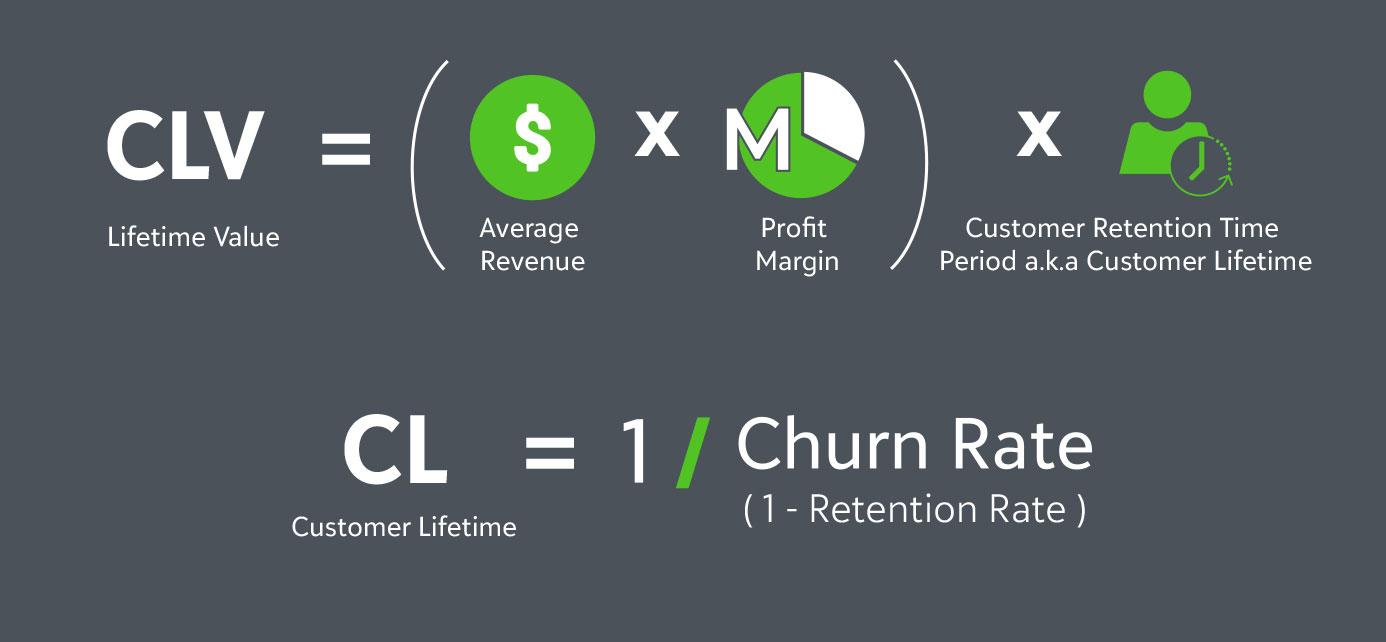
As you plan how you can make your business case for CSR, consider calculating the new customer lifetime value (CLV) from an increase in retention rate or decrease in churn rate if your customers remain loyal because they align with your company’s values. This is a simple formula for measuring CLV and a good place to start.
10 CSR and ESG Statistics about Consumer, Employee, and Investor Beliefs
We have armed you with a variety of stats that show how CSR can contribute to the bottom line. But the real question is: Do my investors or shareholders care about CSR or ESG?
Well, the answer is Yes. ESG and CSR intersect through the governance structure and a company’s efforts under the “Social Pillar”. The following statistics focus on the growing importance of sustainable business practices. Whether you’re a high growth startup seeking investment funding or a publicly traded company, this data will shed light on the critical importance of corporate purpose.
- 88% of investors globally are interested in sustainable investing – Morgan Stanley 2025 Sustainable Signals Report
- More than 80% investors believe companies should address environmental issues, and over two-thirds say social issues should also be tackled – Morgan Stanley 2025 Sustainable Signals Report
- 76% of investors expect companies to have defined their corporate purpose and 93% think it is needed to set a long-term business strategy that creates value – CECP Corporate Purpose Driving Business Value 2025
- 80% of global investors agree it’s possible to achieve financial gains while focusing on positive environmental or social outcomes – Morgan Stanley 2025 Sustainable Signals Report
- Sustainable funds on average continue to strongly outperform conventional funds – Morgan Stanley 2025
- As of 2025, 99% of the S&P 500 publish a yearly sustainability report – G&A Institute: 2025 Sustainability Reporting in Focus
- Nearly a third of reporting companies have community engagement policies – CECP Investing in Society 7th Edition
-
Companies with a corporate purpose see revenue 58% higher than those without a corporate purpose – Deloitte 2025 Corporate Purpose: Driving Business Value
- Two-Thirds of Gen Zs and Millennials say they are willing to pay more for environmentally sustainable products or services – Deloitte 2025
-
One quarter of Gen Z (23%) and Millennials(22%) say they’ve researched a company’s environmental impact or policies before accepting a job by them – Deloitte 2025
5 CSR statistics about Employee Beliefs and Employee Engagement
- 75% of Gen Zs consider an organization’s societal impact when evaluating potential employers, with 2 in 10 already changing jobs or industries to align with their values – Deloitte 2024 Gen Z and Millennial Survey
- 44% of Gen Zs and 40% of millennials have turned down employers that don’t align with their values – Deloitte 2024 Gen Z and Millennial Survey
- 89% of Gen Zs and 92% of millennials consider a sense of purpose to be important to their job satisfaction and well-being – Deloitte 2025 Gen Z and Millennial Survey
- Among employees who report positive mental well-being, 67% of Gen Zs and 72% of millennials feel their job allows them to make a meaningful contribution to society – Deloitte 2025 Gen Z and Millennial Survey
- Only 21% of global employees are actively engaged. This low engagement costs the global economy $438 billion in productivity in one year. – Gallup State of the Global Workplace 2025
These statistics showcase how employees, especially from the younger generations, feel about working for a purpose-driven company and showcase the benefits of highly engaged employees.
If employee attraction and retention are a top priority for your organization, consider partnering with your HR or recruiting team to help build the business case for a CSR program. For more insights on why employee engagement is so important for your business, check out this blog.
6 CSR Statistics about Executive Beliefs
While the management of a CSR program may be in the hands of the social impact team, HR or Communications team, in order to fully leverage an organization’s resources to do good, the discussion and execution should extend to the executive leadership team. Here are some helpful statistics you can share with them in the initial stages.
- 90% of CEOs advise their successors to continue investment in sustainability initiatives – United Nations Global Compact Accenture 2025 CEO Study
- 46% of executives say making sustainability a source of competitive advantage is their top priority – Mercer 2025 Executive Outlook
- Executives believe that purpose-driven leadership is critical to retaining an engaged workforce, building competitive advantage, and making progress toward long-term goals – CECP Corporate Purpose Driving Business Value 2025
- 76% of CEOs agree that the importance of purpose has increased over the last five years and 75% believe it will increase over the next five years – CECP Investing in Society 7th Edition
- Nearly 70% of CEO’s agree that companies should make expenditures to address sustainability/ESG issues relevant to the business – PwC 2024 Annual Global CEO Survey
- 99% of CEOs report they are focused on expanding or maintaining their sustainability-related commitments – United Nations Global Compact Accenture 2025 CEO Study
As you consider how social responsibility will show up in your organization’s corporate governance structure, remember you can always learn from your peers! Look up the corporate governance codes of brands that communicate strong corporate social responsibility to see what policies show up.
Topics

Learn, Adapt, and Lead in Corporate Responsibility
If you’d like to speak to an expert one-on-one about your goals, ideas, and opportunities for building your business case, feel free to get in touch! We would love to assist you in bringing CSR to your business.


Frequently Asked Questions
-
In addition to community impact, CSR programs can increase market value by up to 6%, raise profitability by as much as 21%, boost sales by up to 20%, decrease staff turnover by 57%, and improve employee productivity by 21%.
-
Yes! 46% of all consumers and 51% of millennials pay close attention to a company’s social responsibility efforts when making purchase decisions. Additionally, 45% identify as purpose-driven consumers, with many willing to pay more for sustainable products.
-
Investors strongly value sustainability. 88% of investors globally are interested in sustainable investing, and 80% believe financial gains can be achieved while focusing on positive environmental or social outcomes. Because of the immense focus on social impact by investors, stakeholders, and consumers, nearly all S&P 500 companies now publish sustainability reports to showcase their impact year-over-year.
-
Yes. Today, a sense of purpose is critical for job satisfaction and well-being. In fact, 75% of Gen Zs consider societal impact when evaluating employers, and 44% of Gen Zs and 40% of millennials have turned down jobs that don’t align with their values.
-
Executives overwhelmingly support CSR with many seeing sustainability as a source of competitive advantage. 90% of CEOs actually advise their successors to continue sustainability investments, and 99% report focusing on expanding or maintaining sustainability commitments.