Increase Loyalty and Drive Engagement in Consumer Reward Programs with Donation Options

Main Takeaways:
- Modern consumers, particularly Gen Z and Millennials, prefer brands that exemplify strong values and incorporate corporate social responsibility (CSR) into their operations.
- Integrating donation options into consumer loyalty programs allows customers to donate earned rewards to causes they care about, increasing loyalty and engagement with the brand.
- By using technology, companies have successfully embedded give-back options into their reward systems, showcasing the tangible impact customers have, which also boosts brand visibility and trust.
- Offering donation options in loyalty programs can bridge the gap for smaller nonprofits lacking marketing budgets and engage younger consumers in philanthropy, especially during times of economic uncertainty.
Brands are facing an entirely new generation of consumers. The modern consumer has different values – more importantly, they expect brands to represent their values as strongly as they do.
91% of consumers globally prefer a business that takes CSR and environmental issues seriously.
Gen Z and Millennials align with brands that not only make a difference but also have a mission. Adding a donation roundup at point-of-sale has been the go-to option for engaging consumers with corporate purpose, but we are now seeing brands get creative with adding a give-back option.
The next generation of brands are integrating give-back options into their consumer loyalty and rewards programs. So what does this look like exactly? You are shopping and see that extra percent off or the ability to earn deals, so you create a customer rewards account. You are racking up points, miles, cashback, etc. and now brands are giving you the option to donate to a cause that you care about with those rewards rather than spending them.
The technology to enable this type of give-back option is readily available for brands to launch in weeks instead of months. Change is a YourCause partner that provides a modern giving platform to allow brands to embed these donation options into their loyalty program. Here are a few examples of companies using this technology.
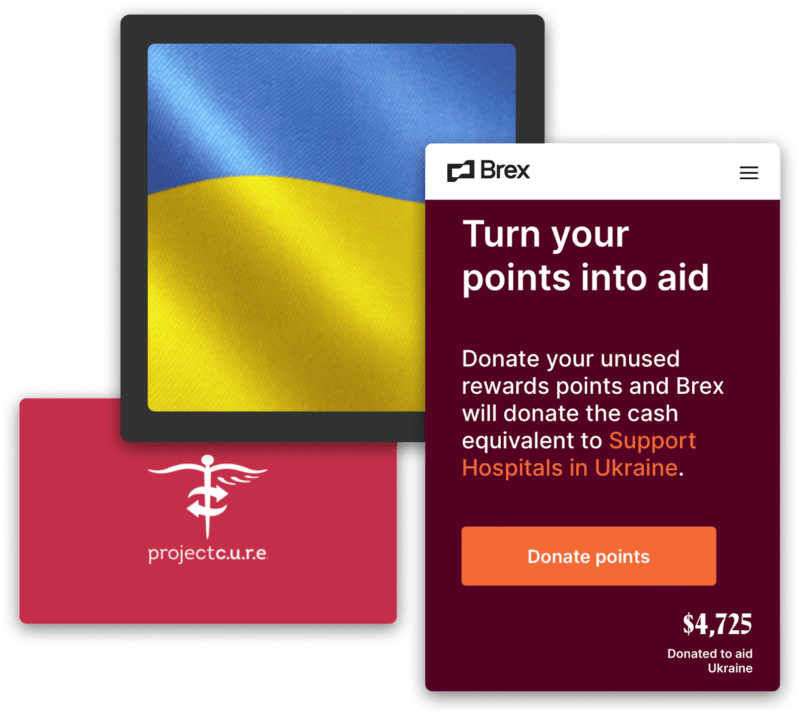
Brex, Credit Card Points for Humanitarian Efforts in Ukraine
Brex, a credit card company backed by Kleiner Perkins, enabled credit card points to humanitarian efforts in Ukraine. Offering donation rewards is just the beginning of a brand’s impact story. After embedding these rewards, brands can share their impact with their community – Brex launched a live tracker for their cardholders to see their community’s impact. Rewards members are making an impact alongside the brand, and by launching public-facing trackers, brands are empowering their members with content that can be easily shared with their respective communities. Customers are excited to share impact-first content, ultimately driving brand visibility for the company that made it happen.
Care/of, Plant a Tree Reward Option
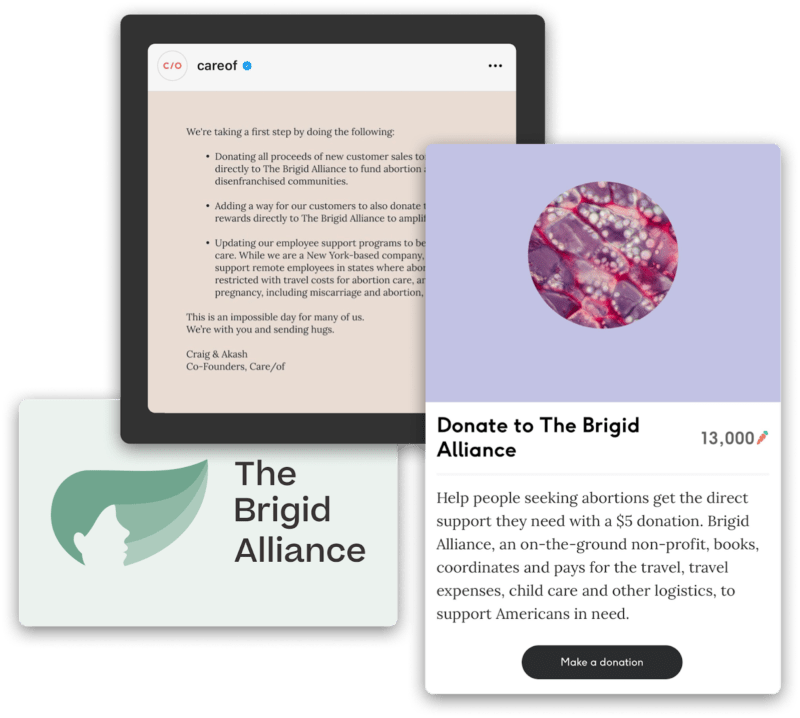
When customers feel their impact, engagement increases in loyalty programs. Care/of, a direct-to-consumer vitamins company, offers their customers the ability to plant one tree as a rewards option. By quantifying the impact, customers can tangibly feel the impact they are making with their favorite brands. Furthermore, by offering impact stats as reward options (ex. 800 points to plant one tree), brands can preserve economics in their loyalty programs. At the same time, Care/of also offers carbon offsets and donations to LGBTQ+ causes within its loyalty program. By presenting different nonprofit options, brands can learn about which causes their customers are most passionate about, segment their target audience, and build more accurate customer profiles.
The 2022 Edelman Trust Barometer reports that societal leadership is now a core function of business. Brands are looking for ways to build trust with all stakeholders and corporate social responsibility is an integral part of that strategy. 76% of millennials and Gen Z consumers have purchased or would consider purchasing from a brand to show their support for a specific issue. At the same time, 42% of millennials said they could not afford to give to charities – 2022 Giving Report, CanadaHelps. Research from Blackbaud Institute’s latest report, Philanthropy Through Recession, shows that giving to charities will decrease during economic uncertainty.
Embedding philanthropic giving with consumer loyalty programs provides a simple way for brands to engage consumers that are making any necessary purchases. By adding donation options within a loyalty program, brands can seamlessly highlight a nonprofit organization that is responding to major events or disasters. This connection to timely and topical causes can help close the gap for grassroots organizations that don’t have marketing budgets to solicit fundraising and give the younger generation, which otherwise wouldn’t donate, an avenue to give back.
Topics


Frequently Asked Questions
-
By embedding donation options within loyalty programs, brands enable consumers to donate their rewards to causes they care about, increasing engagement and aligning the brand with consumer values.
-
These generations prefer brands that actively participate in social and environmental causes, and donation options in loyalty programs can drive engagement and brand loyalty by meeting these expectations.
-
When consumers see the tangible impact of their actions, like planting a tree with reward points, their engagement and loyalty tend to increase, as they feel connected to meaningful causes through their purchases.
-
Brands can track the collective impact of consumer donations, like supporting humanitarian efforts, and can share this information with their community using tools like live trackers, enhancing brand visibility and consumer pride.
-
By featuring nonprofits in their loyalty programs, brands can spotlight organizations responding to major events, bridging funding gaps for grassroots initiatives that may lack significant marketing resources.